Preview · Edition in preparation · Not yet available
AV Author library
Amber · Youth, adventure, character
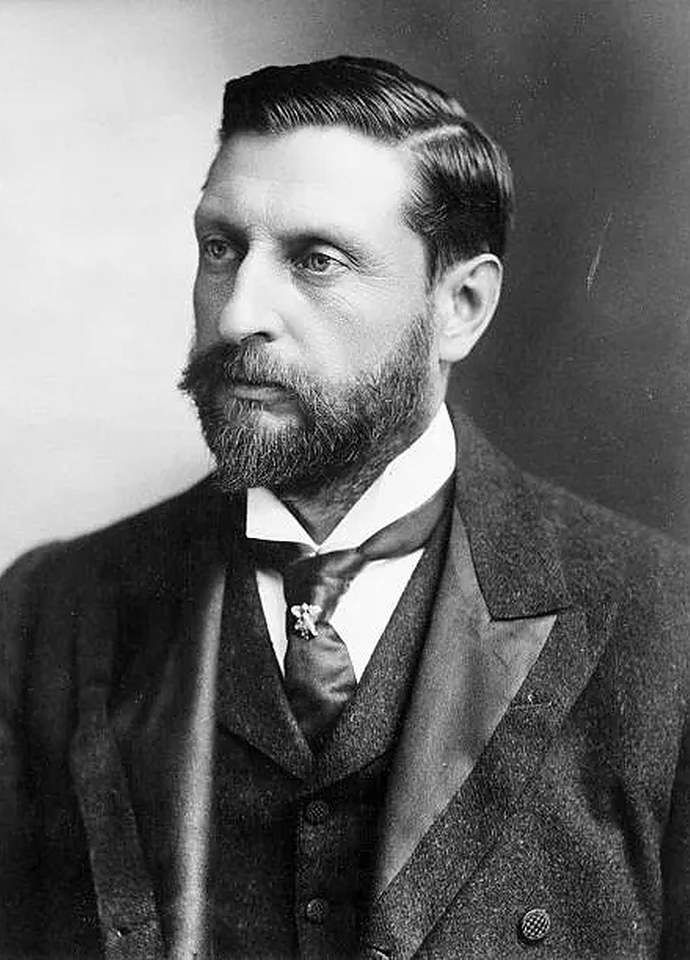
H. Rider Haggard
1856–1925
Most alive as a writer when a line across a map opened into country not yet crossed.
Colonial official in Natal and the Transvaal, barrister, farmer and romancer: in 1885 Haggard answered the challenge of Treasure Island with an African adventure — and gave the lost-world story its lasting form.
The edition follows Cassell’s 1887 “fifty-third thousand” printing, read against the original page images, and keeps the rougher, less regularised voice in which the first readers met Allan Quatermain. A publisher’s introduction, nine source-bound notes, an afterword and an editorial note on the copy text accompany the novel, together with Walter Paget’s nine plates. Further volumes of the English Haggard series — Allan Quatermain, She, Ayesha and Nada the Lily — are in preparation.
SeriesAmber line · Pillar V
First editionLondon, Cassell, 1885
TextThe author’s own English · Cassell 1887
Print edition306 pages · nine plates by Walter Paget
FormatsPaperback · Hardcover · Kindle
Author & context
From the veld to the Norfolk fields
Those African years gave him something more valuable to the future writer than a catalogue of scenery: a memory of distances, camps, political ceremony and frontier talk.
01
Natal and the Transvaal
Henry Rider Haggard was born at Bradenham Hall in Norfolk on 22 June 1856, the eighth child of a large country family. At nineteen he was sent to Natal on the staff of Sir Henry Bulwer, and in 1877 he accompanied Sir Theophilus Shepstone’s mission into the Transvaal at the time of the British annexation. He later served as Master and Registrar of the High Court there.
He returned to England, entered Lincoln’s Inn and was called to the Bar in January 1885. The law never became his true country.
02
The wager with Stevenson
Haggard later recalled that a notice of Robert Louis Stevenson’s Treasure Island prompted him to attempt an adventure of his own; a later memoir supplied the famous wager with his brother. What can be said securely is that Stevenson supplied the challenge, and that Haggard wrote under the pressure of emulation rather than the shelter of an established reputation.
He remembered the writing as taking “about six weeks”, done in the evenings while his days belonged to the Temple; his notebooks place the drafting over roughly sixteen weeks, from January to 21 April 1885. She and Allan Quatermain followed within two years.
03
Land and legacy
At Ditchingham in Norfolk Haggard became a practical farmer. A Farmer’s Year and the two volumes of Rural England grew from that life, and led him into public service on land settlement and on the Royal Commission on Coast Erosion and Afforestation. He was knighted in 1912.
He died in London on 14 May 1925; his ashes were buried at St Mary’s, Ditchingham. By then Allan Quatermain had long escaped his maker and entered the common stock of adventure.
01
About this edition
Paperback, hardcover and Kindle in preparation · ordering links to followMore →